Kitsap Transit’s 2025 Year in Review
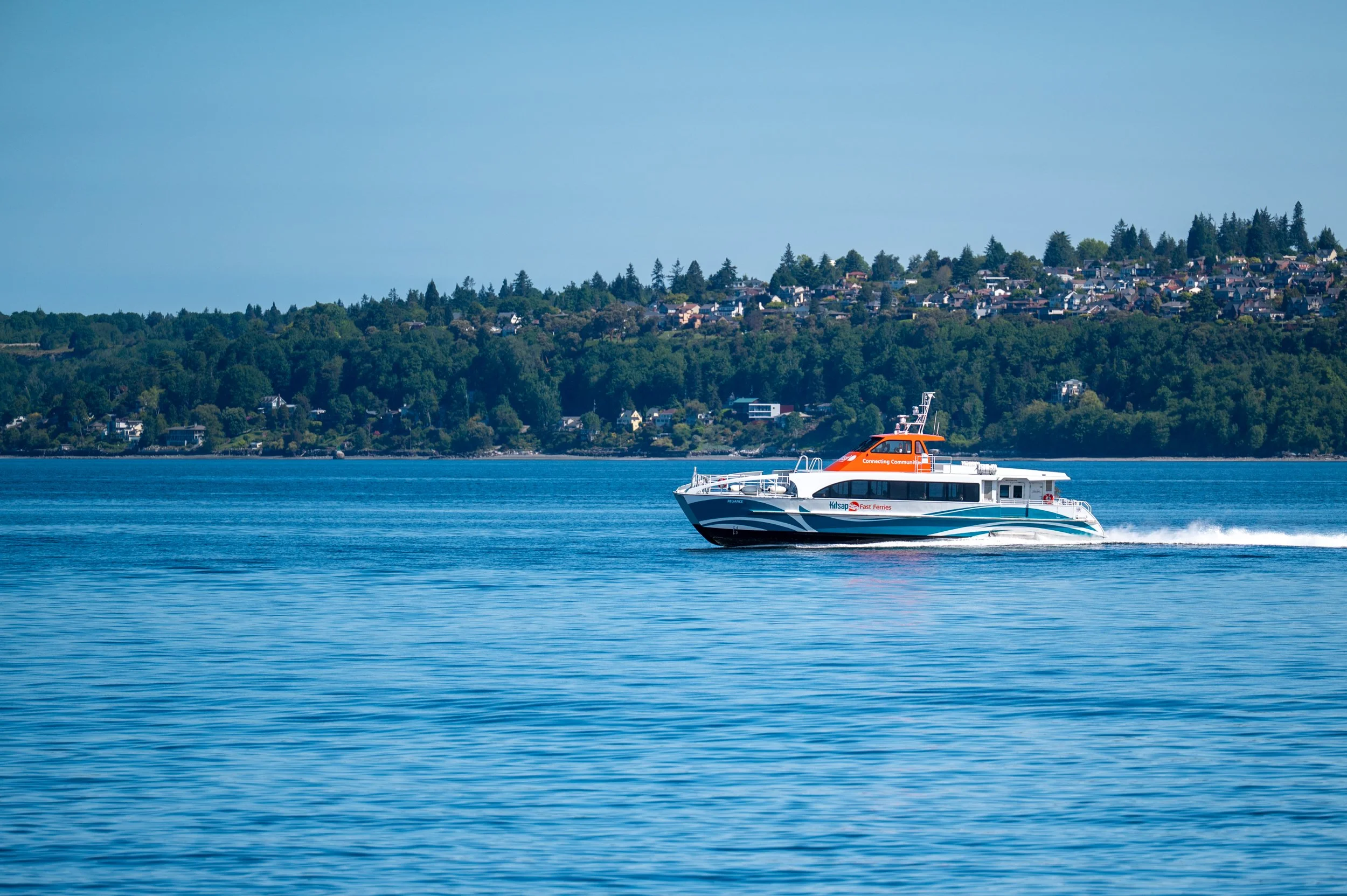
A Kitsap Transit fast ferry crosses Elliott Bay.
2025 was a year of improvement for Kitsap Transit. We upgraded our communication tools, partnered with community organizations to improve access to life-saving medication, education, and transportation, and took steps to stabilize the future of our ferry programs.
Below, read the top Kitsap Transit stories of 2025:
Expanding and improving Kitsap Transit’s informational tools
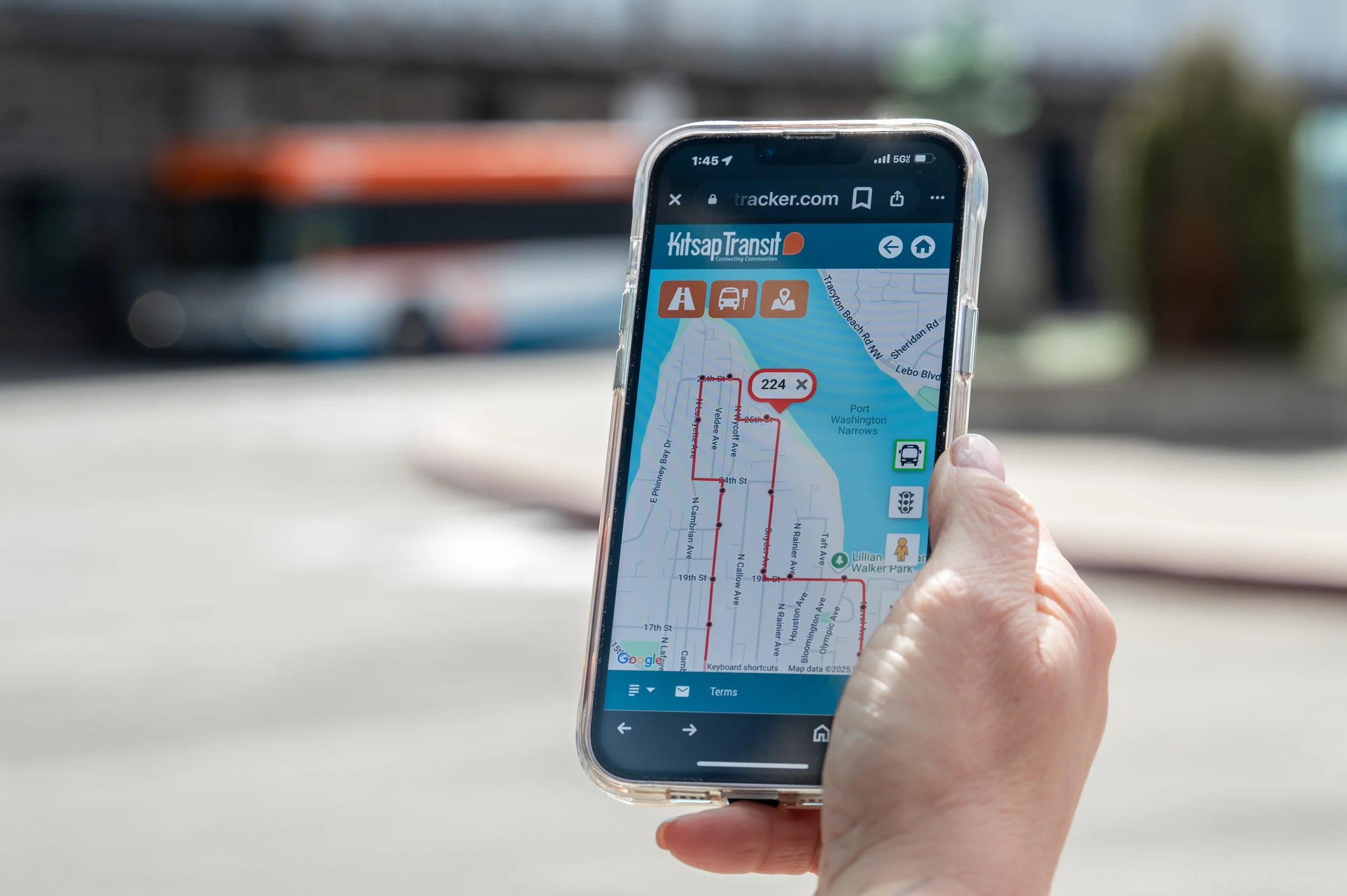
A rider uses KT Tracker to see their bus’s real-time location.
For several months at the end of 2024, Kitsap Transit was without a real-time bus tracker or rider alert software, which made it extremely difficult to communicate with our riders about bus or ferry disruptions.
We made upgrading our communication tools a priority in 2025, both digitally and in print. Now, riders can track their bus or ferry in real-time at KTTracker.com or on several third-party apps, sign up for highly customizable text and email alerts, and download up-to-date print schedules from an accessible online portal.
We’re not done yet – Kitsap Transit is also piloting a text-for-next-arrivals feature, which allows riders to text or call a number to find out which buses are arriving soon at a particular stop.
Extra weekday Bremerton Fast Ferry service extended through August 2026
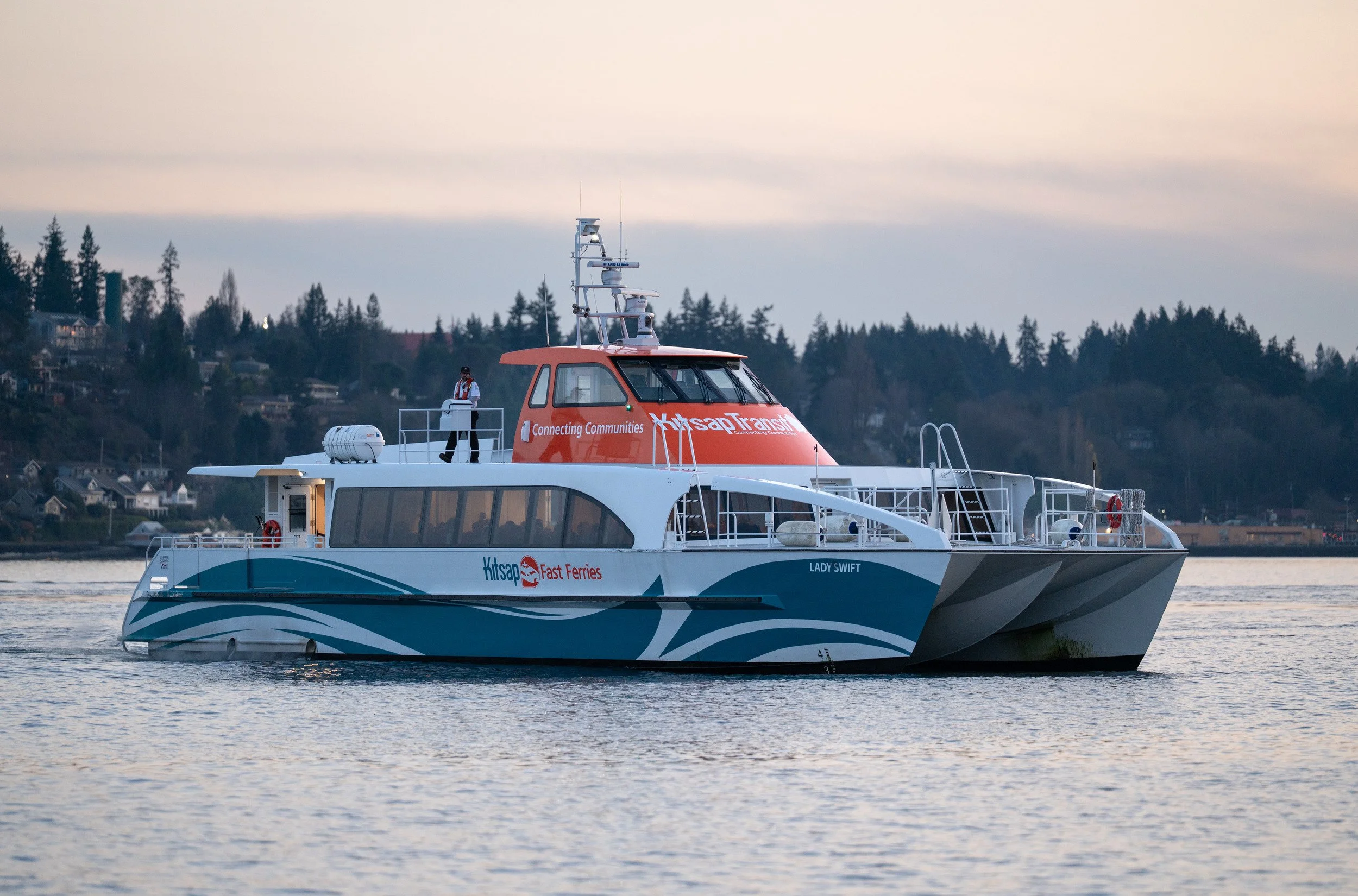
M/V Lady Swift approaches the Bremerton dock.
Since 2022, the Bremerton Fast Ferry has operated additional weekday and weekend sailings to help fill in for Washington State Ferries, which at the time was operating only one boat between Bremerton and Seattle. In June 2025, WSF returned to full two-boat service on the Bremerton-Seattle route.
Kitsap Transit has received $2.9 million from the state to continue this extra passenger-only ferry service on the Bremerton-Seattle route through the end of August 2026. The Bremerton Fast Ferry will operate the extra sailings on weekdays, but not on Saturdays from October through April.
The Future of Kitsap Ferries

The Carlisle II sails in Sinclair Inlet.
Kitsap Transit took several steps to improve the sustainability of our ferry program in 2025.
Kitsap Transit received a $300,000 state grant to study the feasibility of new intracounty passenger-only ferry routes and conducted a survey of riders in June to gather feedback on which routes they’d like us to evaluate. In July, we held a series of public meetings on our proposed Seattle Fast Ferry Terminal project.
Finally, in October, Kitsap Transit raised fares and stopped accepting transfers and PugetPass on our fast ferries. We did this to align our policy with Washington State Ferries and to improve the long-term health of our ferry fund.
Kitsap Transit bus operator wins national Roadeo Competition

Kitsap Transit senior operator Val Quill sits behind the wheel of a bus.
Kitsap Transit Routed bus operator Val Quill took home first place in the 35-foot bus competition at the 2025 Community Transportation Association of America (CTAA) roadeo in May, becoming the first woman ever to do so.
Quill, who has driven for Kitsap Transit for more than 40 years, achieved the top score in a field of six transit agencies competing in the 35-foot bus category at CTAA’s Roadeo in San Diego. We are incredibly proud of Val, who in addition to this win has a track record of more than 35 years of driving without a preventable accident.
Community partner collaborations
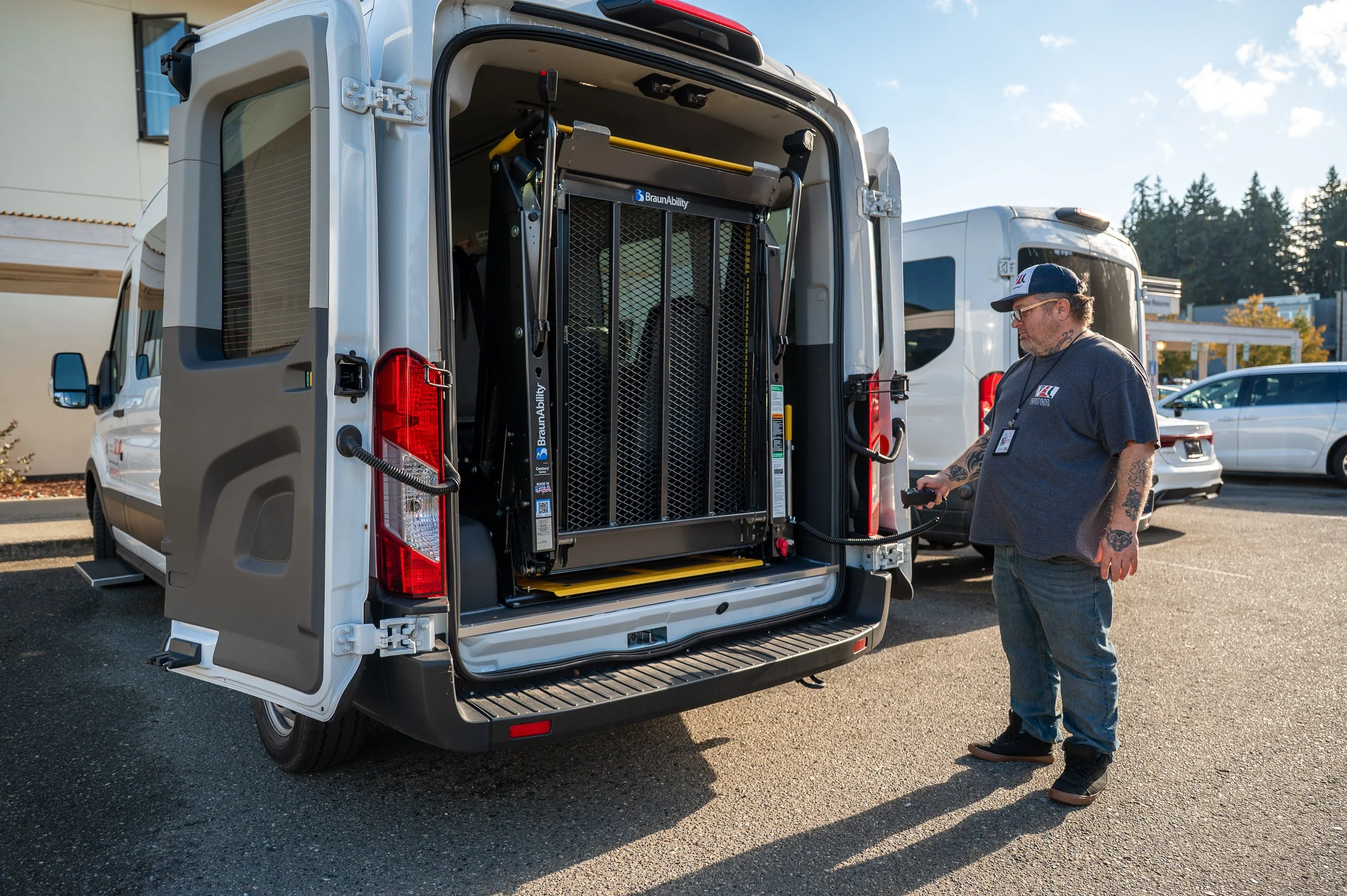
Washington State Department of Veterans Affairs employee Michael Harrison operates the wheelchair lift on a Kitsap Transit vanlink van.
Throughout 2025, we spotlighted many of the ways Kitsap Transit partners with other organizations in our community.
Starting in April, Kitsap Transit hosted an electrical theory course for mechanics, taught by an Olympic College instructor. The class is meant to train KT mechanics in the foundations of electrical theory—knowledge they’ll need to safely diagnose and repair KT’s growing electric fleet—as well as mechanics for private businesses.
We also partnered with Salish Behavioral Health this year to place naloxone cabinets at the Bremerton Transportation Center and Port Orchard Ferry Dock. Thanks to this partnership, the opioid overdose-reversing medication is now available for free at those transit hubs.
Kitsap Transit’s VanLink program provided the Port Orchard Transitional Housing Program with a new 10-person van to help transport veterans to their appointments. Many of the homeless veterans in the program face addiction or mental health issues while they work toward permanent housing. The van means veterans can rely on consistent, reliable transportation to these critical appointments.